
Economics Major and Minor

Explore how private interests, public institutions, and interest groups shape social issues. Make positive change through our economics program.

Program Snapshot

Undergraduate Bachelor of Arts

Major, Minor

124

4 Years

Salem

Person in a blue sweatshirt writing in a notebook at a table with a laptop, red notebook, and white water bottle.

Our Economics Degree

Navigate the complex world of decision-making. Major in economics and delve into social issues that impact our global society. Experience one-on-one support and hands-on learning to prepare for a career or graduate school.

Why choose Economics at Willamette?

  • Proximity to a strong career network. The State Capitol is just blocks away from campus. Find opportunities with the Legislative Revenue Office, Office of Economic Analysis, Department of Forestry, and other state agencies.
  • Hands-on learning. Through courses, internship options, and student groups, students gain real-world experience that will help them in the future.
  • Liberal arts foundation. We encourage students to study other topics and disciplines. Dive into other subjects to enhance your understanding of economics and its impact around the world.

Schedule a Visit

Request Information

Do you have questions about the Economics program at Willamette? Fill out this form and we'll get in touch!

Loading...

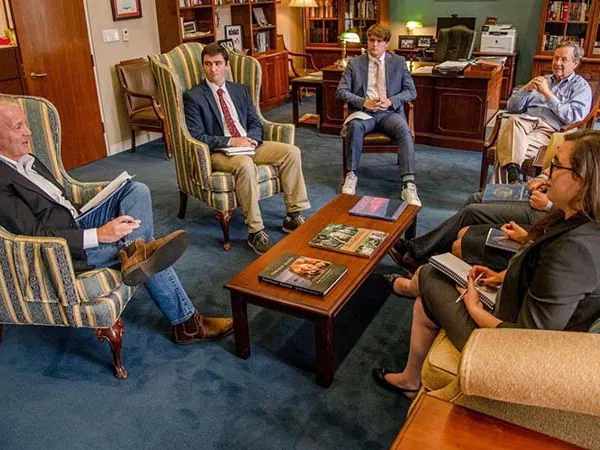
For Chris Brown BA '23, an internship with Alaskan Senator Dan Sullivan opened doors and offered an inside look at the legislative process -- setting him on a path to his career.

Chris's Story

Senate internship leads student on ‘path to employment’

Over the course of his internship, Chris had the opportunity to sit in on weekly Senate meetings and observe discussions between Alaskan ambassadors and Native American leaders. He also contributed to developing a bill focused on returning Native cultural artifacts.

View Story
Chris Brown
Brown sits next to Sen. Dan Sullivan (left) and near Chief of Staff Larry Burton (far right).
Answering calls from constituents and leading tours gave Chris the chance to experience the public-facing side of political life. He also heard first-hand what concerns and questions mattered to voters.

Opportunities Beyond the Classroom

Curious where this major can take you? These are the real internships, graduate opportunities, and careers our Economics students have gone on to.

  • Willamette students in a classroom

    Internships

    • Equitable Advisors
    • HSBC
    • MAVS KC
    • Multnomah County
    • Optiver
    • Peace Corps
    • State of Oregon
    • Straub Outdoors
    • Talking Rain Beverage Company
    • Tocura Healthcare Staffing
    • Tremblay Financial
    • UW Health
  • Willamette students sitting outside on a sunny day

    Graduate School Destinations

    • Duke University
    • Kedge Business School
    • Oregon State University
    • Stanford University
    • UC Santa Cruz
    • University of Arizona
    • University of Massachusetts, Amherst
    • University of Oregon
    • University of Oxford
    • USC Marshall School of Business
    • Willamette University
  • Willamette students in a classroom

    Employment Outcomes

    • City of Portland
    • Epiq
    • Evergreen Economics
    • Getty
    • Merkle
    • Metro
    • Oregon Employment Department
    • Oregon State Hospital
    • Pacific Seafood
    • Peacock
    • SAP
    • State of Colorado
    • YMCA

Alumni Stories

Our strong alumni network includes leaders in business, law, politics, education, finance, and public administration. Our students have analyzed international economics issues, changed public policies, and worked for consulting firms.

  • Emily Brixey ’15

    Emily Brixey ’15 credits Willamette for opening doors to her fulfilling career.
    Emily Brixey ’15 navigates education policy at KnowledgeWorks, advocating for personalized competency-based learning. Her career journey, from the Oregon State Senate to the Education Commission of the States, reflects her interdisciplinary approach.

    A smiling young woman with light brown hair in a blazer, against a colorful floral background.
  • Jeremy Coste portrait

    Jeremy Coste ’17

    Jeremy Coste ’17 gives thanks to collaborative environments and close relationships with professors.
    A double major in Mathematics and Economics, Jeremy Coste ’17 became one of Bank of America's youngest directors at just 24. His journey started at Willamette, where he represented the university at the International Collegiate Business Strategy Competition.

Introducing Some of Our Faculty

Connect with trailblazers who have made a name for themselves in the industry. With backgrounds in finance, economics, and political science, our faculty members can help you broaden your education. Work with professors in small classes to foster a deeper grasp of the subject.

  • Meet Professor Sivers Boyce

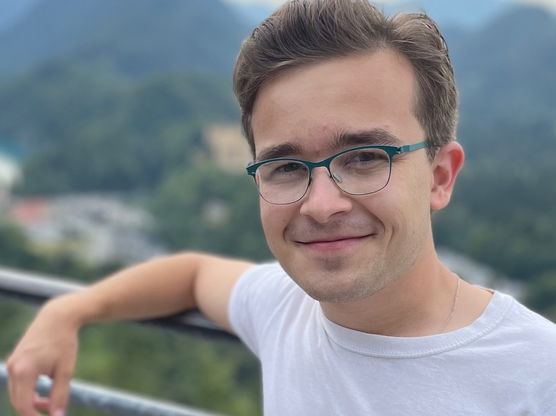
    Dr. Nathan Sivers Boyce specializes in teaching microeconomics, environmental economics, economic statistics, and econometrics. His research focuses on economic curriculum and pedagogy, local policy issues, and the economics of international environmental agreements.

    Headshot of Dr. Nathan Sivers Boyce
  • Meet Professor Knight

    Dr. Tabitha Knight is a feminist macroeconomist whose research examines gendered labor markets, economic development, and international trade and finance. Her students benefit from her approach, which spans economics, international studies, and gender studies.

    Headshot of Tabitha Knight
  • Meet Professor Mascarenhas

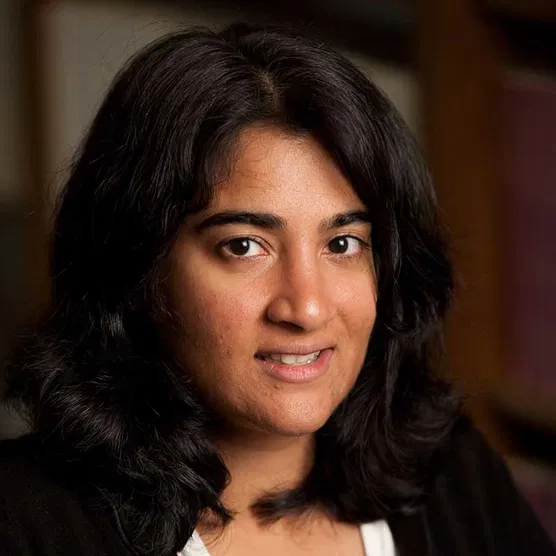
    Dr. Raechelle Mascarenhas specializes in the political economy of development, with a focus on foreign aid, remittances, and economic policy in South Asia. Her students benefit from her expertise in microeconomics and the role of government in the economy, as well as her research on global economic challenges.
    Raechelle Mascarenhas

Curriculum

Gain a solid foundation in economic theory, quantitative analysis, and critical thinking skills. Through small class sizes, you'll receive one-on-one attention and ample opportunities for engaging in discussions and collaborative projects. Apply economic and social science concepts to real-world problems.

  • ECON 115: Production, Distribution, and Power in Contemporary Economics

    Discover the factors behind wage disparities, the cost of basic goods, and the economic implications of climate change. You'll explore modern issues through a pluralistic framework, gaining insights into market institutions, government policies, and societal structures.

  • ECON 454 The Next System

    Explore alternatives to capitalism, where you'll engage with critical arguments from the production/conflict/labor theory of value tradition. Delve into the critiques of capitalism, analyze historical attempts at socialism, and investigate innovative proposals for future economic systems.

Program Requirements

Economics requires 9 courses or 36 semester hours to complete the major, with a total of 124 credit hours required to complete the degree.

Students pursuing an Economics Minor will need to complete 20 semester hours.

Students seated in a classroom listening attentively with waterbottles in front of them

Admissions Information

Our Economics program is open to first-year students, transfer students, and international students. Learn more about Willamette’s undergraduate admissions process to get started.

Students writing on a white board

Financial Aid and Scholarships

Willamette University proudly offers generous merit scholarships and financial aid to our students. There is no separate application required to be considered for these scholarships. All admitted undergraduate applicants are automatically evaluated for merit-based scholarships, which start at $28,000 per year. These scholarships are awarded in recognition of academic excellence, taking into account cumulative GPA and SAT or ACT scores, if taken.

Hands typing on a laptop keyboard with French manicured nails and a silver ring on the right hand, on a wooden table.

FAQs

A degree can lead to a wide range of career options in various fields. Some potential career paths include:

  • Economic Analysis and Research
  • Finance and Banking
  • Business and Management
  • Public Policy
  • Market Research
  • International Trade and Development
  • Education
  • Data Analysis and Statistics
  • Actuarial Science
  • Economic Consulting
  • Public Relations and Communications

Employers across different industries highly value skills like critical thinking, data analysis, and a grasp of economic principles. Get a better understanding of what you can do with an economics degree on our career options page.

Choosing between an economics major and a business major depends on your interests, career goals, and preferred learning style.

Economics focuses on how societies allocate resources, make decisions, and address issues, emphasizing abstract models, data analysis, and critical thinking. It will help you develop strong problem-solving skills and a grasp of economic principles. Career options for graduates include roles such as economists, financial analysts, policy advisors, and market researchers, often involving policy-making.

On the other hand, a business major encompasses various aspects of running and managing organizations, including finance, marketing, management, and operations. Business helps you develop practical business skills such as management, planning, marketing, financial review, and organizational behavior. Business administration graduates can pursue careers in corporate management, marketing, finance, and consulting.

If you are interested in broader issues, research, or policy-making, economics might be the better fit. If you prefer learning about running businesses, management, or marketing, a business major might be more suitable.

You can also consider a double major. Willamette offers a path to major or minor in either program.

Studying economics offers numerous benefits that apply to the real world. It provides insights into how societies allocate resources, make decisions, and address issues like poverty, unemployment, and inflation.

A grasp of economic systems enhances your ability to think critically, analyze data, and solve problems. It also involves the use of models, statistics, and data analysis to understand economic phenomena.

An economics degree opens doors to diverse career paths in finance, government, business, research, education, and more. You can work as an economist, financial analyst, policy advisor, market researcher, and in many other roles. Shape public policy and contribute to developing policies that address key societal challenges.

Absolutely! Willamette offers an economics minor to help you expand your knowledge while still pursuing other subject matters.

Yes. Explore our studying abroad as an economics major guide to learn more about the possibilities.

Willamette University

Economics